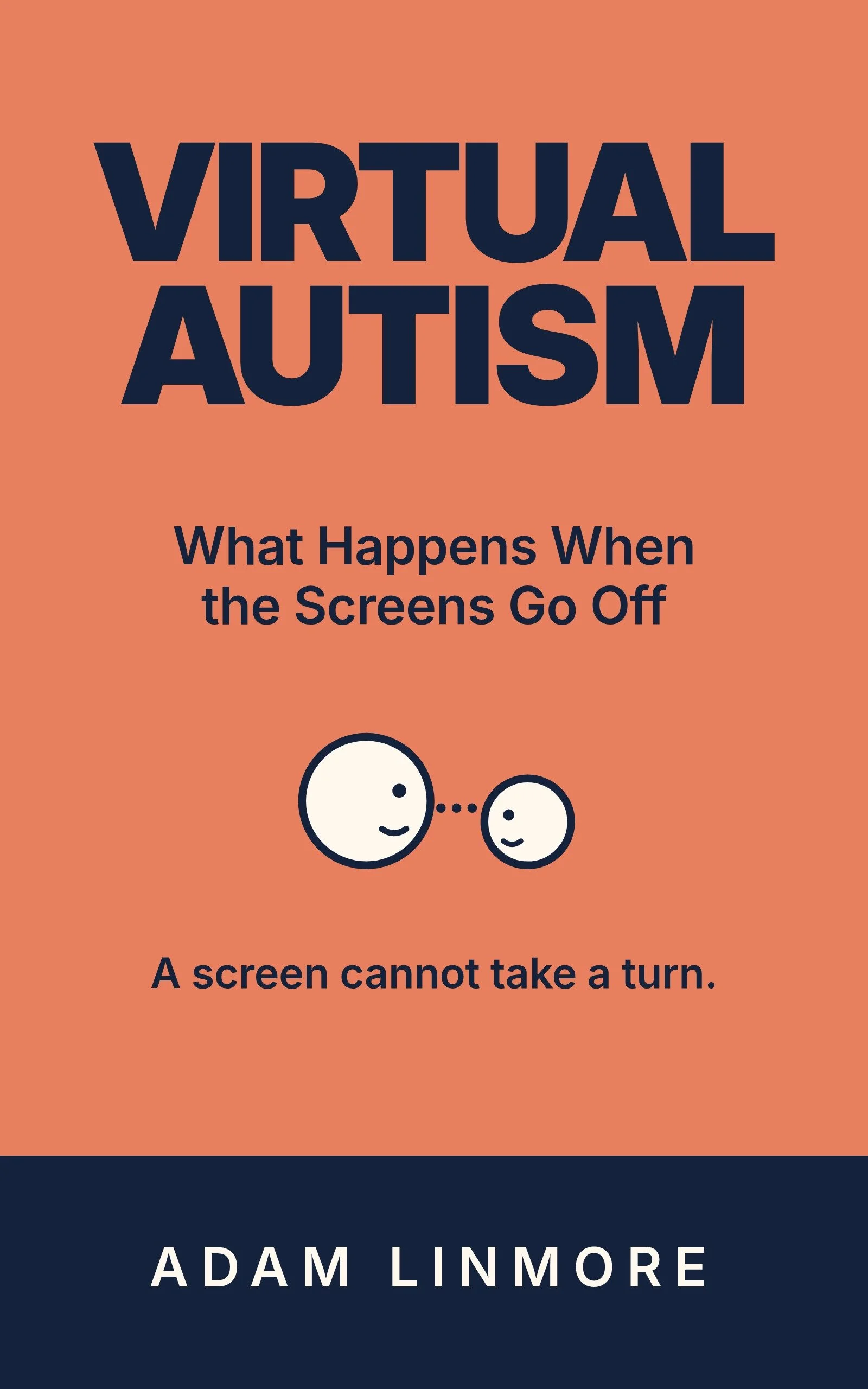
Virtual Autism
What Happens When the Screens Go Off
Late one night, a special educator who had spent years working with autistic children typed a question about his own daughter into a search box. Among the results was a parents' forum, where a stranger used two words he had never met in all his training: virtual autism. The phrase is not a diagnosis, and this book does not treat it as one.
Virtual Autism is the book he went looking for and could not find. It rests on one of the most consistent findings in the science of early language: babies learn to talk by taking turns with a person who answers them. A screen cannot take a turn.
The story begins with a toddler who stopped looking up, a television that went into hiding and the afternoon she looked up again. From there the book turns to the evidence: what the largest studies have found about screens and the youngest children, where those studies fall short, and what health authorities around the world now advise, with a country-by-country guide to more than forty countries and territories.
It names no one in its story, promises no miracle and blames no parent.
Get the book
| Format | Details |
|---|---|
| Paperback | 6 × 9 in, 342 pages, with charts, notes, references and an index |
| Hardcover | 6 × 9 in, case laminate |
| Ebook | Kindle and other ebook stores |
Coming soon to Amazon and major bookstores.
What readers will find
A plain-language guide to the research on screens, language and early development
The studies that complicate the story, given equal room
A country-by-country guide to screen and school phone rules in more than forty countries and territories
A practical plan for the first weeks with the screens off
How to ask for an evaluation, and why to keep it even when things improve
Letters and handouts for grandparents, caregivers and doctors